The short answer is Chhau, a dance form born in eastern India, but one that has been a shapeshifter over time, saying no to strict labels.
In Mayurbhanj district of Odisha, this dance and its UNESCO-recognised heritage will unfold as part of ‘The Chhau – A Music Festival’, set in and around The Belgadia Palace.
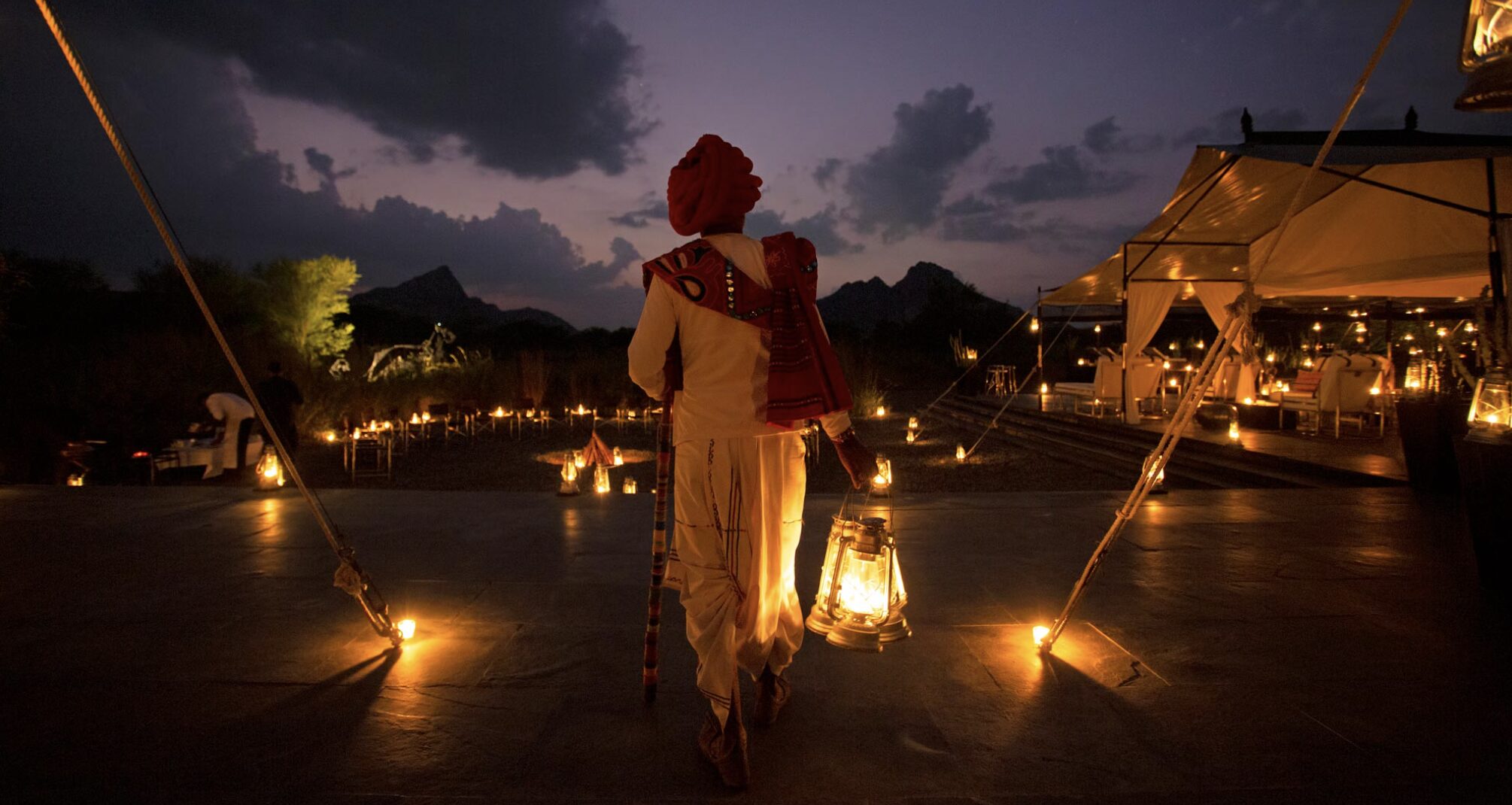
The Belgadia Palace itself is a former royal residence of the Mayurbhanj family of Odisha, turned into a chic boutique hotel adorned with their relics and artefacts.
Mrinalika and Akshita Bhanj Deo, sisters and descendants of the family, are the custodians of the 200-year-old property that doubles as a cultural hub showcasing east India and in particular Mayurbhanj’s tribal heritage and natural riches.
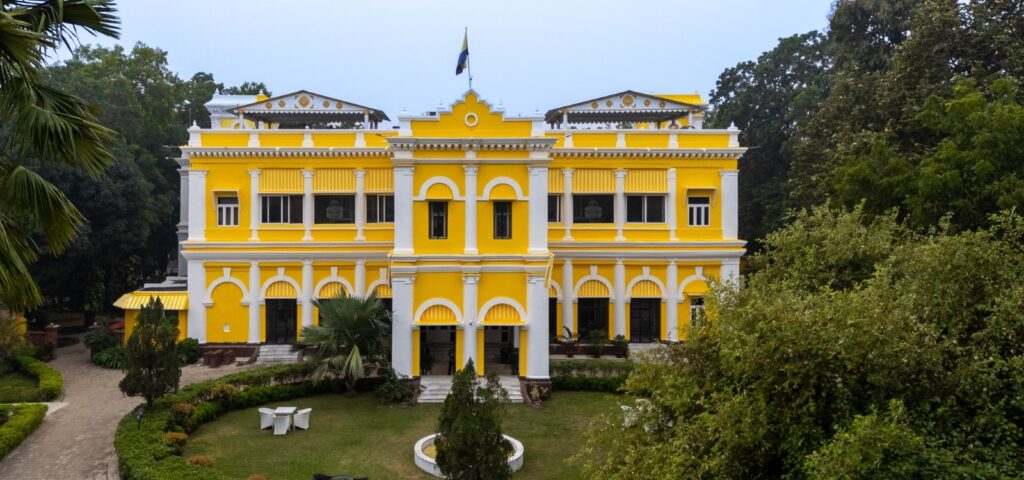
guests attending ‘The Chhau – A Music Festival’ in late January 2026.
What is Chhau?
Chhau is a dance form (both masked and unmasked) that has imbued martial arts, tribal imagination from the eastern states of West Bengal, Jharkhand and Odisha, and classical elements. But, in essence, it is a movement-driven storytelling.
It uses the strength and grace of the legs, spine and torso more to narrate tales.
Its stories sweep across Indian epics, like battles from the Mahabharata, play from the Puranas, but they also show the everyday and all life forms: the sway of a peacock, woman carrying water, the stealth of a tiger, the flutter of a bird taking flight, the humour of village life…
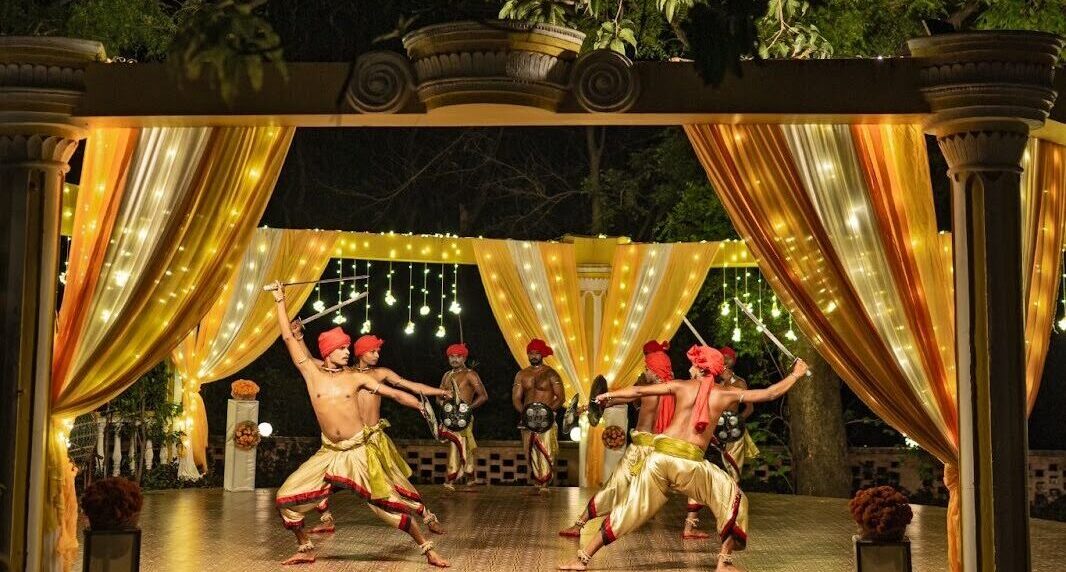
Chhau didn’t start on a stage. It began in the training grounds of royal soldiers. In the mid-19th century, the elite army in Mayurbhanj practised combat techniques that would become this distinctive dance form: Mayurbhanj Chhau. The leaps, the strikes, the footwork are all rooted in martial discipline. The other styles are Purulia Chhau (West Bengal), which is vibrant and dramatic, with its towering masks; and Seraikella Chhau (Jharkhand), which is refined, minimal and delicately masked.
At one point, the dance forms were confined to courts, refined as a royal artform, before they escaped the gilded rooms to re-enter a common man’s life. It’s still largely considered a tribal art form, performed during harvest festivals.
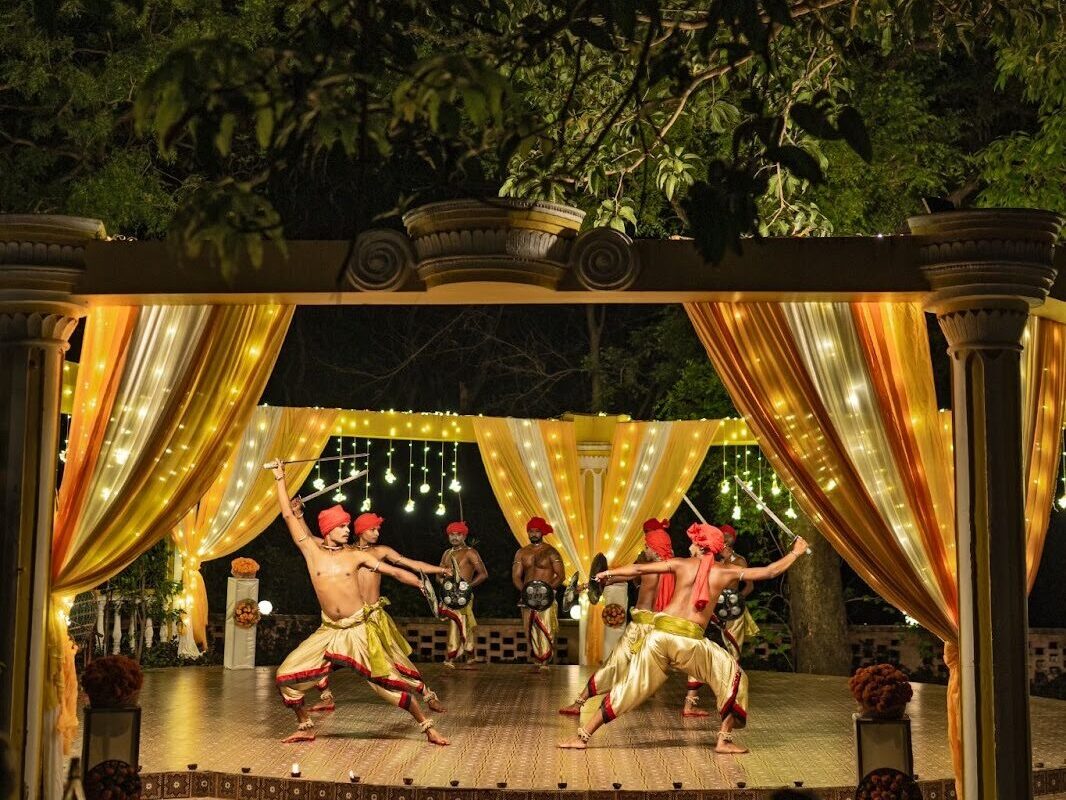
discipline of former elite soldiers of the land. Photo courtesy: RARE India
From royal akharas (training hubs) to the tribal belts, from royal courts to more recent culture capitals, and from spring-time celebrations to stage performances, Chhau has travelled quite a journey. And now, it can be appreciated anew in Odisha, the land that shaped its fiercest form: the Mayurbhanj Chhau.
The setting
January in Mayurbhanj brings cool days and pleasant evenings, the perfect setting for The Chhau – A Music Festival.
RARE India and Aadi Naada, an art collective, have collaborated with The Belgadia Palace Hotel to create this three-day celebration, after their successful inaugural heritage journey in early 2025. As Shobha Mohan, founder of RARE India, says,“Seeing the performance in its land puts the spotlight back on the dance forms. Such interactions keep up the continuity required for heritage practices to thrive.”
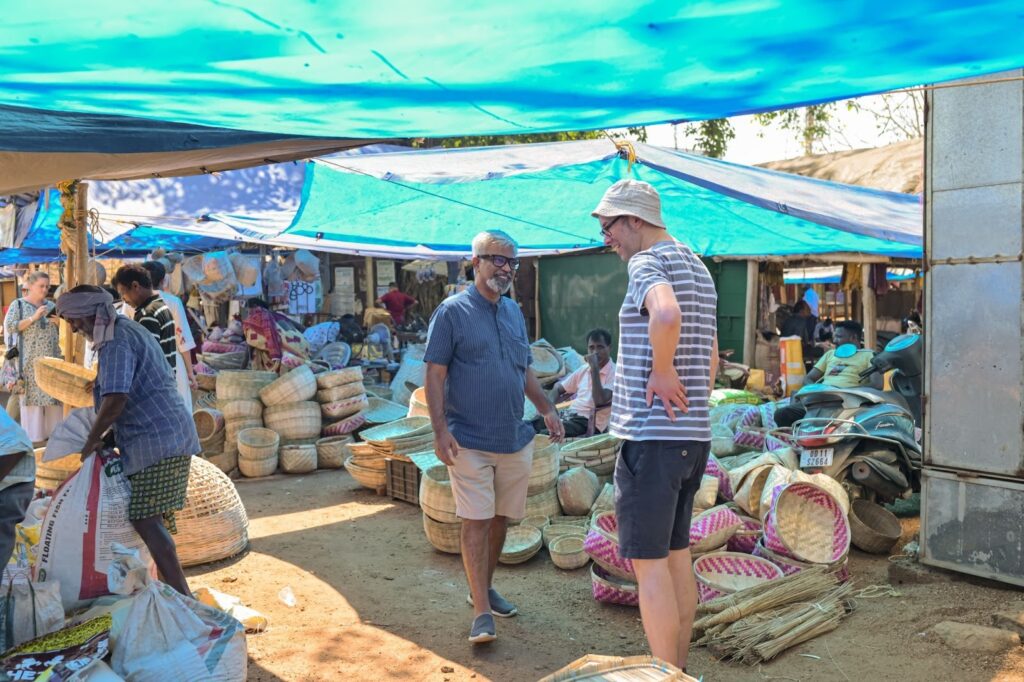
crafts, watch dancers rehearse, and explore the natural beauty of Mayurbhanj that shaped
this art. Photo courtesy: RARE India
Good to know
- Ideal for art lovers, culture travellers, photographers, textile enthusiasts and performing-arts seekers.
- Supports indigenous artists directly
- Limited-capacity experience
QUICK TAKE : ‘THE CHHAU – A MUSIC FESTIVAL’
WHAT?
A 3-day cultural immersion celebrating Chhau, Eastern India’s UNESCO-recognised dance form. Features performances and music at The Belgadia Palace, and also artiste interactions, village visits, textile art, and visits to natural attractions.
WHERE?
The Belgadia Palace, Baripada, Mayurbhanj, Odisha
A 200-year-old royal residence restored into a boutique hotel and cultural hub.
WHEN?
January 29-31, 2026
The most pleasant month to experience Mayurbhanj: cool days, crisp evenings, perfect for open-air performances.
For more details and to book this experience, contact shoba@rareindia.com