This Women’s Day, we’re doing away with platitudes and instead, spotlighting women who are rewriting the rules of Indian hospitality. Consider this your invitation to travel with a slightly sharper eye…and a lot more admiration for the women running the show.
8th March, for us, is less about hashtags and more about spotlighting the women reshaping what hospitality can feel like in India. Not just in corner offices, but in forests, palaces, pilgrimage towns and high-altitude deserts where the idea of luxury is being rewritten as care – for people, place and community.
These are hoteliers who think in ecosystems, not just experiences; who are as invested in gender parity, local livelihoods and culture as they are in thread counts and tasting menus. For travel designers like Panache World, which curates travel for guests who have seen “five-star” a thousand times before, these women-led projects feel like the future: soulful, sustainable, design-forward and deeply rooted in where they are.
Shruti Shibulal: Tamara Leisure Experiences

Shruti Shibulal has quietly built one of India’s most thoughtful hospitality portfolios in the form of Tamara Leisure Experiences, where responsible tourism isn’t a line in a manifesto, but the operating system. As Executive Vice Chair and long-time CEO, she has led a 10x growth of the group while insisting that people, planet and profit stay in the same room. Tamara’s properties in South India and business hotels in Germany weave in green building practices, wildlife preservation and careful resource use. Under Shruti’s value-driven leadership, the brand has become synonymous with sustainability, gender parity and real job creation in local communities …the kind of back-of-house impact you can actually feel in the front-of-house warmth. For travellers, that translates into stays that are serene and well-run, but also gently consciousness-raising: pilgrim hotels that understand multigenerational families, coffee estates that respect the forest, and a brand that proves scale and soul can co-exist.
Priya Paul: The Park Hotels and Raan Bas The Palace Patiala
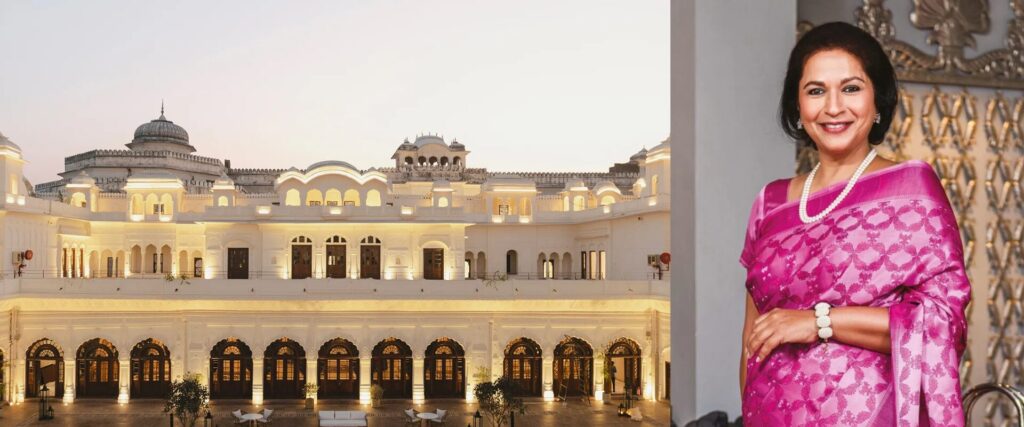
Long before “boutique” and “design-led” became category clichés, Priya Paul was already steering The Park Hotels into that lane and flooring the accelerator. As Chairperson of Apeejay Surrendra Park Hotels, she transformed a traditional city-hotel portfolio into a collection of contemporary, art-forward spaces that speak directly to India’s new creative class. Her latest chapter is Raan Baas The Palace in Patiala, Punjab’s first true luxury palace hotel, where she’s backed a meticulous restoration in collaboration with conservation architect Abha Narain Lambah. The result: a resplendent palace that feels less like a museum piece and more like a revived royal home, with restored frescoes, revived crafts and staff drawn from surrounding communities. Together, The Park and Ranbaas tell a very Priya Paul story – one where heritage and contemporary design flirt comfortably, and where a woman at the helm keeps nudging Indian hospitality towards something braver, bolder and far more interesting than beige opulence.
Read Panache Founder Director, Loveleen Arun’s review of Raan Baas The Palace.
Husna‑Tara Prakash: Glenburn Tea Estate & Glenburn Penthouse
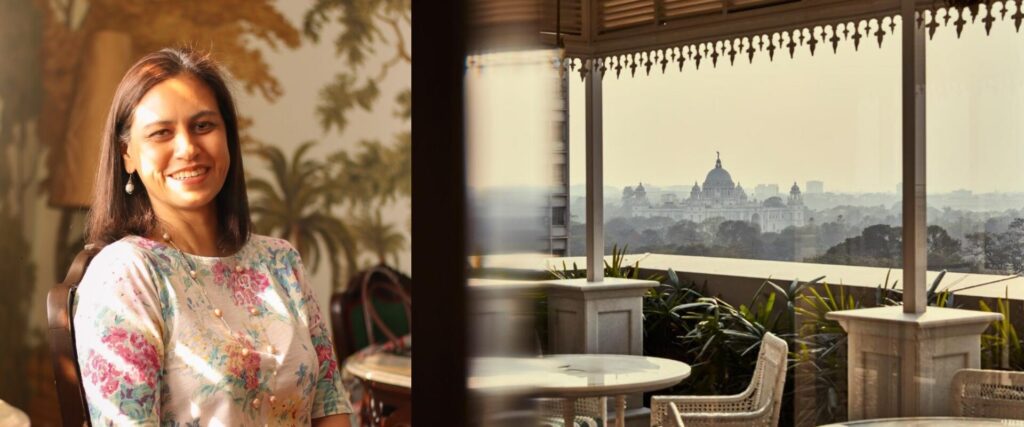
Husna‑Tara Prakash didn’t just enter hospitality; she more or less created the Glenburn universe from scratch. First came Glenburn Tea Estate near Darjeeling, a restored planter’s bungalow set on a working tea estate, where gracious, old-world hosting is paired with serious immersion into the rhythms of plantation life. Think guided tea walks, picnic lunches by the river and the sense of staying in someone’s impeccably run home rather than a hotel. Then came the Glenburn Penthouse in Kolkata, conceived as a “gift to the city”: a rooftop refuge with sweeping views of the Victoria Memorial that brings the elegance of a hill-station planter’s home into an urban setting. Across both, Husna‑Tara’s touch is unmistakable. Layered décor, intuitive hospitality, and a commitment to preserving and celebrating the stories of tea, Bengal and the families woven through them. It’s a masterclass in turning personal passion into a hospitality brand that feels deeply personal, yet effortlessly world-class.
Vidyun Goel: Haveli Dharampura
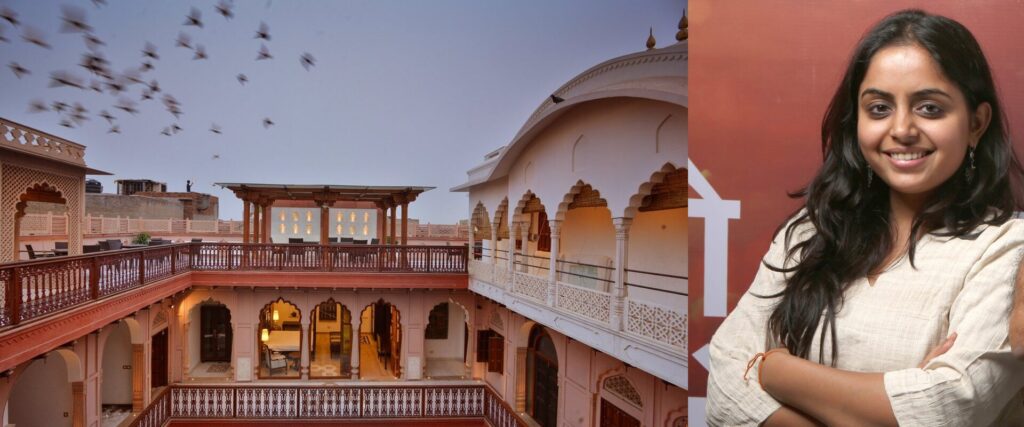
In the dense, intoxicating lanes of Chandni Chowk, Haveli Dharampura is a minor miracle: a 19th-century haveli rescued from decay and reborn as a 14-room heritage hotel. While politician and heritage enthusiast Vijay Goel led the initial charge to save the building, it is his daughter, Vidyun Goel, who has become the young, energetic face of the haveli and its cultural life.Under her stewardship, Haveli Dharampura isn’t just a pretty restoration project; it’s a stage for kathak performances, kite-flying sessions, Old Delhi food trails and terrace views that reacquaint even lifelong Delhiites with their own city. The UNESCO Asia-Pacific Award for Cultural Heritage Conservation feels well-earned here, but what we love most is how Vidyun uses the space to create opportunities for local artisans, performers and hospitality staff – many of them women – within the walled city. It’s heritage, yes, but also a very contemporary story of a young woman turning a crumbling family property into an urban sanctuary with serious cultural cred.
Antara & Jahnabi Phookan: Diphlu River Lodge, Kaziranga
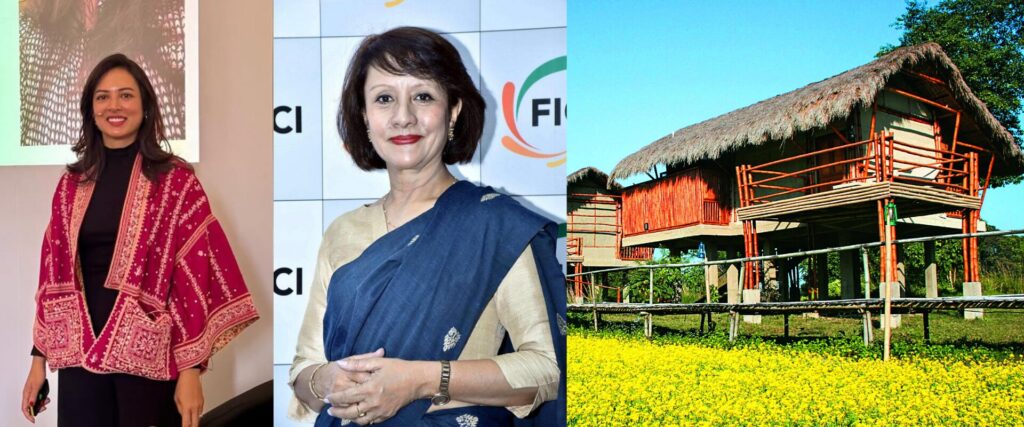
On the edge of Kaziranga National Park, Diphlu River Lodge feels less like a “resort” and more like an extremely well-run secret tucked into riverine forest. Established in 2008, it is the reincarnation of a pioneering 1970s ecotourism lodge, now led by the Phookan family – with Jahnabi and Antara Phookan shaping much of its present-day ethos and guest experience. Thatched, bamboo-on-stilts cottages borrow their lines from Mishing tribal homes, and interiors are dressed with weaves and artefacts crafted by local women. The lodge’s responsible tourism practices run deep: greywater recycling, low light and noise policies, a women’s weaving unit on-site, and hospitality training for young boys and girls from neighbouring villages. Recognised by Lonely Planet and consistently ranked among the top wildlife stays in the country, Diphlu proves that conservation, community uplift and seriously comfortable beds can co-exist beautifully when there are women in the room asking the right questions.
Mrinalika & Akshita Bhansali Deo: The Belgadia Palace, Odisha
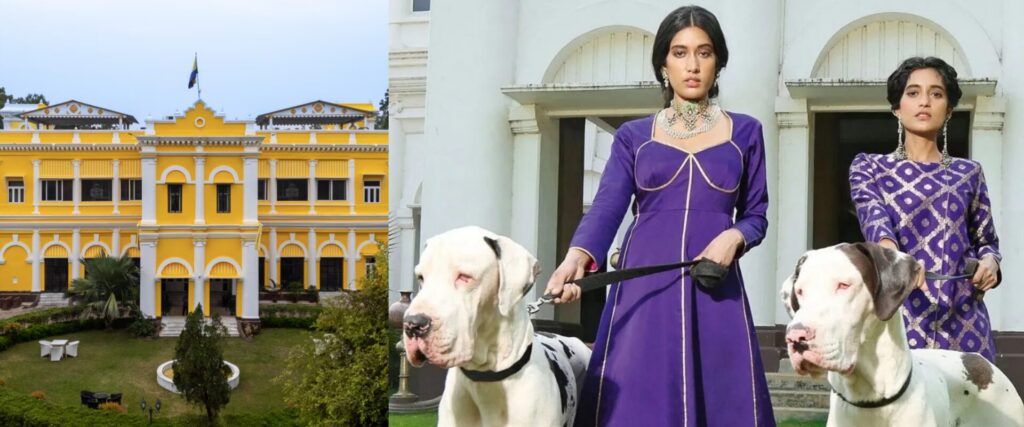
The Belgadia Palace in Mayurbhanj is a 200-year-old residence that could so easily have become a cordoned-off relic; instead, two sisters, Mrinalika and Akshita Bhanj Deo, have turned it into a living, breathing heritage stay with social impact at its heart. Originally built as a Victorian-meets-Georgian retreat for visiting dignitaries, the palace has been restored as a tropical art deco sanctuary where visiting feels more like staying with cultured friends than checking into a hotel. The sisters still live on-site and have opened their doors with a clear agenda: to use tourism to build sustainable communities in this tribal-dominated region through cultural exchanges, workshops and local employment. Guests wander through verandahs lined with indigenous flora, play vinyl in old drawing rooms, and eat from an organic farm, all while being gently plugged into the area’s art forms, heritage sites and wild landscapes. The Belgadia Palace is an elegant rebuke to extractive palace tourism; here, heritage is not just preserved and prettified, but leveraged to create opportunity, particularly for local women and youth.
Rigzin Lachic: Dholkar, Ladakh
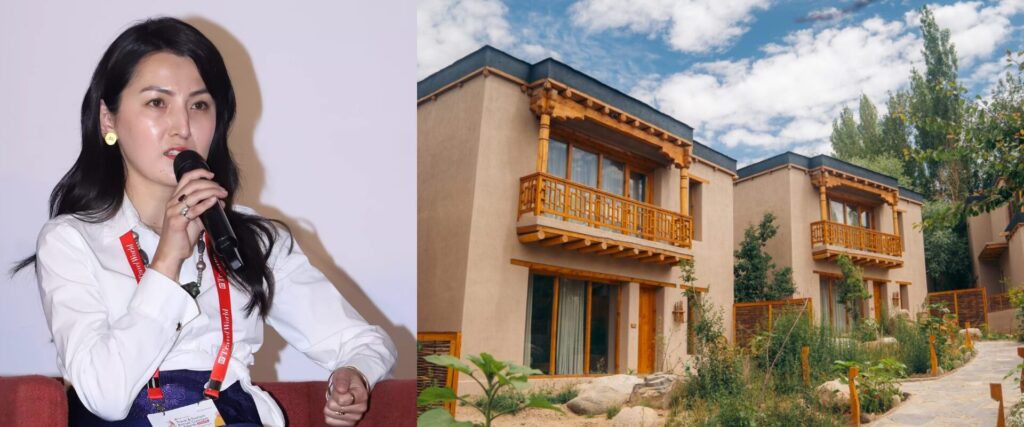
In Ladakh, where the scenery tends to do all the heavy lifting, Dolkhar stands out for something rarer: a woman-led vision of hospitality that is deeply, almost fiercely, local. Founded by Rigzin Wangmo Lachic, this sustainable boutique stay is designed to embody Ladakh’s essence – from its architecture and materials to its food philosophy and community partnerships. Recognised as Boutique Hotel of the Year at the Economic Times Travel & Tourism Conclave, Dolkhar marries crisp, contemporary design with an ethic of minimal environmental impact and maximum benefit to local farmers and artisans. Its plant-based restaurant, Tsas by Dolkhar, turns Ladakhi ingredients into quietly dazzling plates, reframing “vegetarian” as inventive and destination-worthy rather than dutiful. For first timers and travellers who have already “done” Ladakh alike, Dolkhar offers an experience that is slow, rooted, female-led and radically in tune with the land’s fragility and strength.
There are scores of women-led projects to spotlight, but we hope that these five projects have piqued your interest. We love to stitch places like Tamara, The Park, Ibnii, Belgadia Palace and Dolkhar into itineraries that feel as considered as the women who dreamed them up – always tailored, always a little unexpected. If you’d like, we can help you build a trip around one (or several) of these addresses, but for today, we’re simply inviting you to notice them, celebrate them, and maybe let them influence what “luxury” means to you next.